Introduction
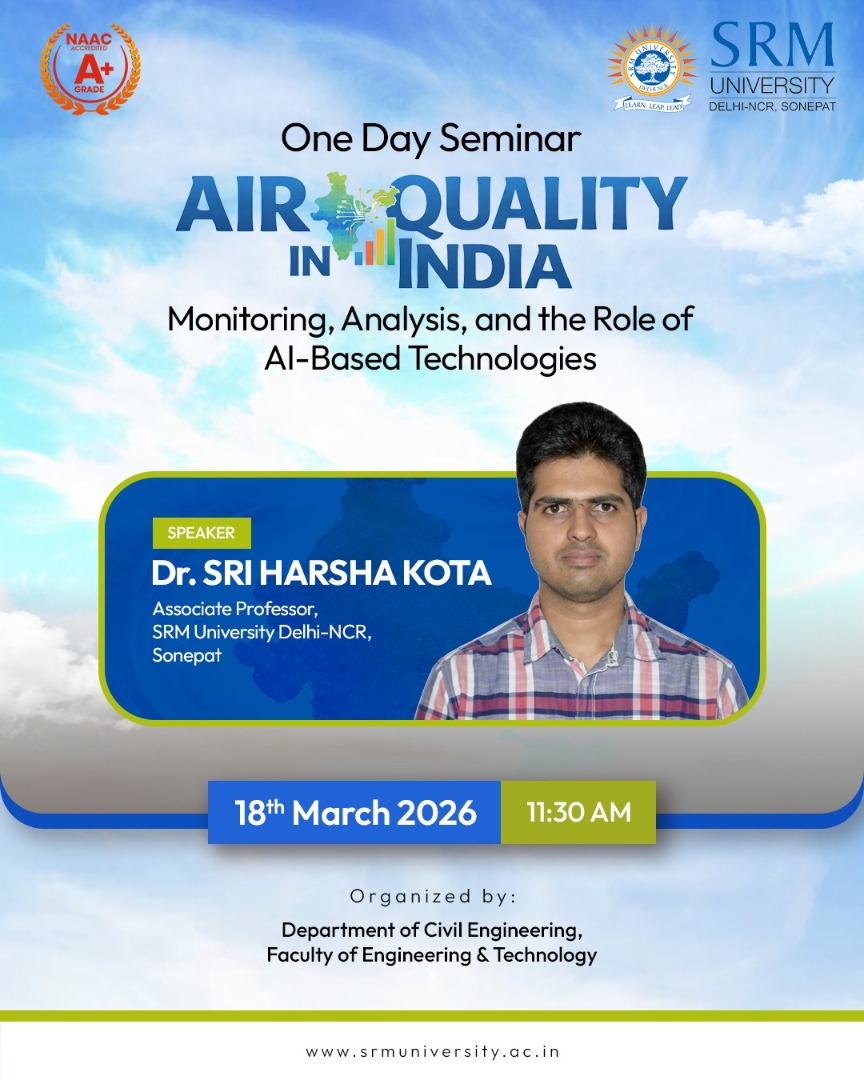
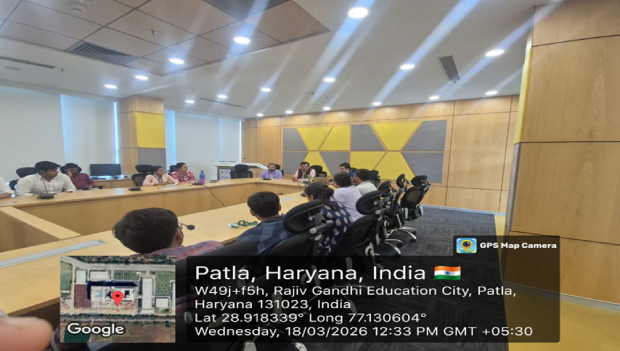
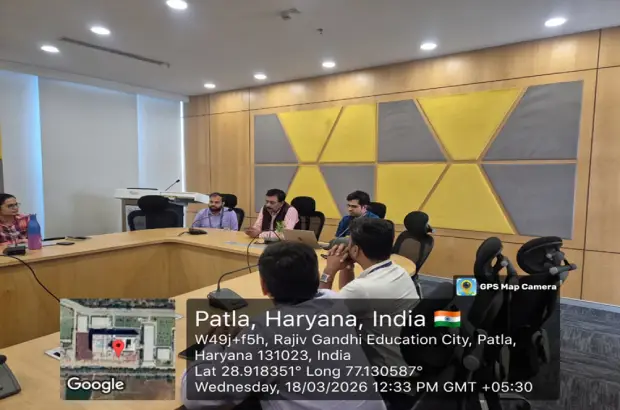
The Department of Civil Engineering organized a One Day Seminar on “Air Quality in India: Monitoring, Analysis, and Role of AI-Based Technologies” on 18th March 2026 in the Mini Conference Room, 5th Floor. The seminar aimed to create awareness among students and faculty members about the growing concerns related to air pollution in India and the emerging technological solutions for effective air quality management.
The session was delivered by Prof. (Dr.) Sri Harsha Kota from Indian Institute of Technology Delhi, an eminent expert in the field of environmental engineering and air quality research. The seminar highlighted the present status of air pollution in India, sources and impacts of pollutants, methods of air quality monitoring, data analysis techniques, and the application of Artificial Intelligence (AI)-based technologies in forecasting, monitoring, and controlling air pollution.
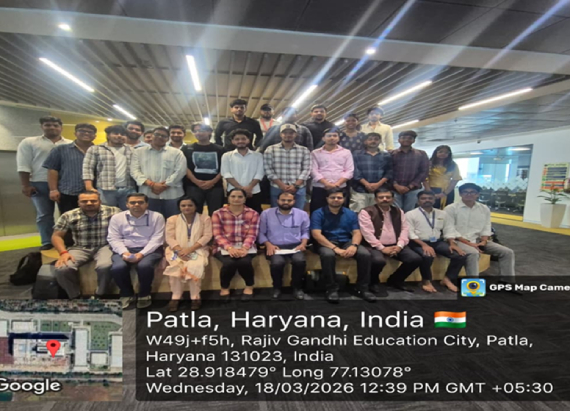
The seminar provided valuable insights into modern approaches for environmental monitoring and emphasized the importance of integrating advanced technologies with sustainable engineering practices. Faculty members and students actively participated in the session, making it highly informative and academically enriching.
Objectives of the Seminar
The main objectives of the visit were:
- To enhance awareness regarding the growing challenges of air pollution in India and their environmental and health impacts.
- To introduce modern techniques and methodologies used for air quality monitoring and analysis.
- To highlight the role of AI-based technologies in the prediction, assessment, and management of air pollution.
- To provide students and faculty members with exposure to current research trends and real-world applications in the field of air quality management.
Event Highlights
Dr. Kota delivered an insightful and informative lecture on the current scenario of air pollution in India, emphasizing major pollution sources, emerging trends, and associated environmental and public health concerns.
The session highlighted various air quality monitoring techniques, including the use of ground-based monitoring stations, satellite observations, and data acquisition systems for real-time assessment of air pollutants.
Detailed discussions were held on analytical methods used for interpreting air quality data and understanding pollution patterns across urban and industrial regions.
Special emphasis was given to the application of Artificial Intelligence (AI) and Machine Learning (ML) technologies in forecasting air pollution levels, data-driven analysis, and supporting environmental decision-making processes.
Dr. Kota also shared several real-world case studies demonstrating the use of AI-based tools for improving air quality predictions, pollution management strategies, and policy interventions.
The seminar featured an interactive question-and-answer session where students, faculty members, and researchers actively participated by discussing real-time environmental challenges and technological implementation issues.
The event witnessed enthusiastic participation from students, faculty members, and researchers, making it a highly informative, engaging, and academically enriching program.
Conclusion
The seminar successfully achieved its objectives by providing valuable insights into the prevailing air quality challenges in India and the transformative role of AI-based technologies in environmental monitoring and management. The session significantly enhanced the participants’ understanding of both the theoretical concepts and practical applications related to air pollution assessment, analysis, and control.
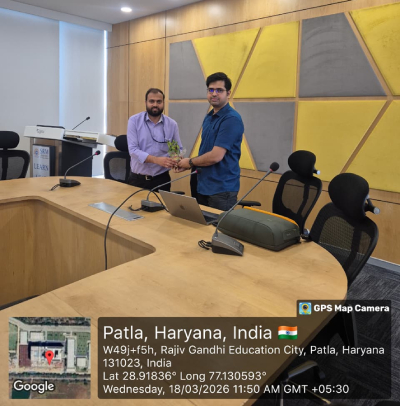
The Department of Civil Engineering expresses its sincere gratitude to Dr. Sri Harsha Kota from Indian Institute of Technology Delhi for delivering an enlightening and impactful session. The department also appreciates the enthusiastic participation and active involvement of students, faculty members, and researchers, which contributed to the success of the seminar.
The event served as an important platform for promoting awareness, encouraging academic discussions, and motivating research initiatives in the field of environmental sustainability and advanced air quality management technologies.